How to Tell Your Sewer Line Needs Replacement — Before It Backs Up
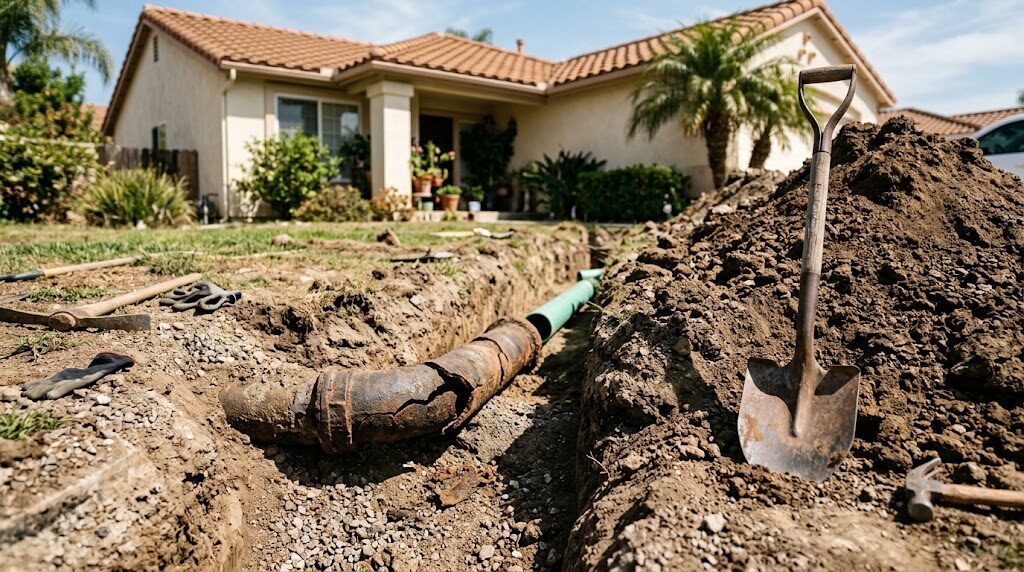
The worst phone calls I get are at 9pm on a Sunday from a homeowner standing in two inches of sewage in their hall bathroom. By the time it's a back-up, you're looking at an emergency snake to make the toilet flush again, plus the sewer-line replacement that's usually waiting on the other side. Here's what to watch for in the months before it gets there.
Signs we see early
1. Slow drains in more than one fixture
Bathroom sink slow? Probably a hair clog. Bathroom sink AND tub AND kitchen all draining slow? That's a main-line problem. Anything past the first fixture downstream is suspicious.
2. Gurgling toilets when other fixtures run
Run the washing machine — does the toilet bubble? That's the main line struggling to vent. Air is finding its way back through the toilet because the line below is partially blocked or collapsed.
3. Sewage smell in the yard
Especially over a particular spot. That's usually a cracked clay tile letting waste seep into the soil. South Bay homes from the 1940s–1960s were almost all plumbed with vitrified clay, and tree roots love it.
4. Lush green patch in the lawn that never fades
Free fertilizer from a leaking sewer. If one strip of grass stays bright green through August while the rest of the yard yellows out, dig there.
5. Recurring back-ups, even after a snake
If we cleared your line three months ago and it's backing up again, the line itself is failing. A snake just buys time.
Why South Bay sewer lines fail
- Old clay tile. Brittle, cracks easily, joints leak. Trees find the moisture and sneak roots in.
- Cast iron from the 60s–70s. Rusts from the inside out. We've cut out 3" cast iron that had a 1/2" inside diameter from corrosion.
- Bellies in the line. Slabs settle, soil shifts, and the line ends up with low spots that catch debris. PVC is forgiving but old clay or cast iron in a settled line is a chronic clog factory.
- Tree roots. The biggest single cause we see. Ficus, eucalyptus, and queen palms all love sewer lines.
The camera inspection
We run a sewer-line camera so you know exactly what's going on. The footage is yours; you keep it on a thumb drive. From the camera we can tell you:
- Where the line is cracked, collapsed, or invaded by roots — and how far from the cleanout.
- Whether you can spot-repair or need a full replacement.
- Whether trenchless (no big trench, "pipe-bursting" or lining) is an option for your situation.
Repair options
- Cable snake. Buys you 6–18 months if the line is structurally fine. The right call when the camera shows roots or grease but no cracking.
- Spot repair. Dig over the failure point, cut and replace 5–15 feet. The right call when one section has failed but the rest of the line is intact.
- Trenchless replacement. Pull a new HDPE line through the old one. Best when the path is clear and the failure is along most of the run.
- Full open-trench replacement. Slowest, messiest, but sometimes the only option — especially if the line has bellies that need to be re-graded.
If you're seeing any of the early signs above, get the camera done now while you're still in the planning conversation, not the emergency one. We'll come out, run the camera, hand you the footage, and write up a real estimate.